
Classmates
Classmates MobileSocial
3.0134.00 Reviews
- Version
- 1.5.41
- Installs
- 50.00K
- Age Rating
- Teen
Screenshots

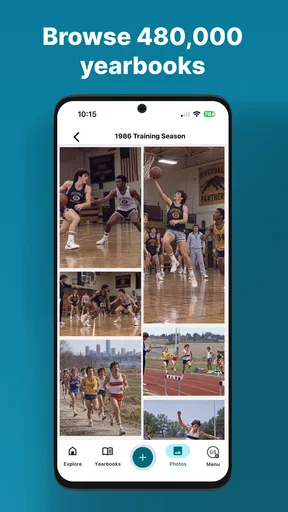
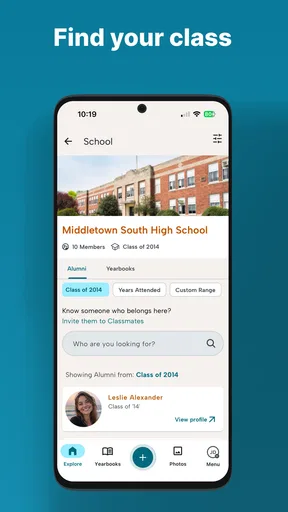

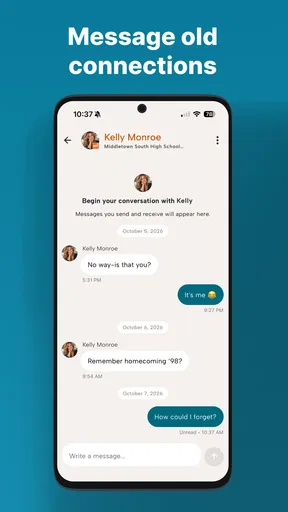
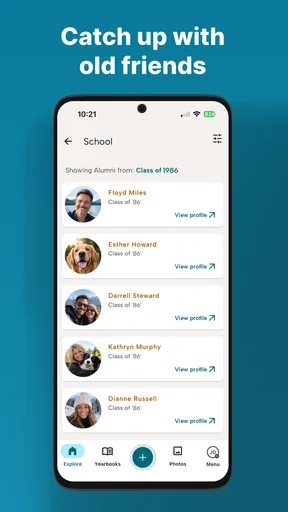

Our Review of Classmates
 Analysis by Appyee
I approached Classmates as a social app built around staying connected with people from school or other familiar circles. Its simple store summary gives it a deliberately broad identity, so the useful question is not whether it replaces every social network, but whether a focused classmates community fits the way you already keep in touch. My impression is that it can be worthwhile for users who want a dedicated place for those relationships, although its modest reception means you should keep expectations realistic.
The app is developed by Classmates Mobile and is available free of charge. That makes trying it fairly easy, especially if you are curious about reconnecting without committing money first. There are also in-app purchases priced from $19.99 to $59.99 per item, so I would treat the free access as the starting point and judge any paid option carefully rather than assuming that every useful part requires payment.
How Classmates fits into everyday social life
Classmates belongs to the social category, but its name gives it a narrower purpose than a general-purpose feed. I would not install it expecting the endless public discovery of a large mainstream platform. Its appeal is more personal: finding a shared context for people who already have something in common. That can make conversations feel less random and can give old contacts a reason to return.
A realistic use case is an informal school group that has become scattered across different messaging apps. Instead of mixing old classmates with family chats, work conversations, and unrelated online communities, members can use a dedicated space for updates, memories, and plans. The benefit is organizational as much as social. A separate app can make a particular group easier to recognize and revisit.
That same focus is also the main limitation. If the people you want to contact are not using it, the app cannot create a community for you by itself. Social tools are only as useful as the network around them, and a polished interface would not overcome an empty contact list. Before spending on anything, I would first see whether the classmates or groups that matter to me are actually active there.
What the free entry point means
The free price is a genuine advantage for testing the basic experience. You can decide whether the app suits your social circle without treating the first installation as a financial gamble. For someone organizing a reunion, looking for former classmates, or simply checking whether a dedicated network feels better than a general platform, that low-friction entry is sensible.
However, “free” should not be confused with unlimited value. The presence of purchases between $19.99 and $59.99 per item changes the decision once you move beyond casual exploration. I would not buy anything until I understood exactly what it adds to my own use: more convenience, a meaningful communication benefit, or merely an optional enhancement. A high purchase price can be reasonable for a feature that a group genuinely needs, but it is difficult to justify for a community that is only occasionally active.
Because the purchase range is wide, the right approach is to separate access from commitment. First, install the free version, invite or locate the people you care about, and observe whether conversations actually develop. Only then should you consider a paid item. This is especially important for a social app, where the value comes from participation rather than from the app existing on your phone.
Who is likely to get real value
I see the strongest fit for people with a clear social purpose. That could be a former class group trying to reconnect, a small community that wants its own online home, or someone who prefers keeping school-related contacts away from a broad public timeline. The app is also more appealing if you dislike having every relationship compressed into one large feed.
It may be useful for a person who is willing to do a little initial organizing. Social apps often work better when someone starts the conversation, identifies the right contacts, and gives others a reason to open the app. In this case, a short message about an upcoming reunion or a shared memory may be more effective than waiting for the platform to generate activity automatically.
I would be more cautious if you want a large, constantly moving social network, a professional networking tool, or a replacement for a mature messaging service. Classmates is not the obvious choice for broad public reach. If your priority is instant contact with relatives, colleagues, or friends who already use another messenger, moving everyone may create more friction than it removes.
Practical ways to test it before paying
My first recommendation is to define the group before judging the app. Do not ask whether it is “good” in the abstract. Ask whether the people from one particular class, school period, or reunion plan will use it. A focused trial gives you a much clearer answer than browsing alone.
Second, use the free period to test continuity rather than just installation. A social app can seem promising on the first day and still become irrelevant if nobody returns. Try using it for a real purpose: share an event idea, gather responses, or keep a conversation going for several days. That reveals more about its practical value than a quick look at the interface.
Third, agree on a simple communication habit with the group. For example, decide that important reunion updates will be posted there while urgent personal matters remain in the usual messenger. This avoids forcing the app to replace every existing tool. It also exposes whether Classmates works best as a dedicated community layer rather than as your only communication channel.
A fourth useful test is to compare the cost with the size and activity of the group. A paid item costing $19.99 may feel very different when it supports an active community than when only two people are checking in. At the upper end, $59.99 is a serious purchase for a casual social experiment. I would make that decision collectively only if the benefit is clear to the people who will actually use it.
How it compares with familiar alternatives
The usual alternatives each have a different strength. General social networks are better when you want discovery, public posting, and a large existing audience. Messaging apps are normally better for immediate one-to-one conversations and small group coordination. Email remains practical for formal announcements and people who do not want another social feed.
Classmates makes the most sense when the shared school connection is the organizing principle. That focus can reduce the noise found in broad platforms, but it also reduces flexibility. A general network may already contain the contacts you need, while a messenger may be faster for arranging a time and place. The dedicated option becomes worthwhile only when the group values having its own context enough to accept another app.
There is also a trade-off between privacy comfort and convenience, although the practical answer depends on how your group already communicates. Keeping classmates in a separate space may feel cleaner than mixing them into a personal account, yet every additional service asks users to remember another login and check another place. I would choose this app for separation and community identity, not because it automatically makes communication simpler.
Reception, maturity, and expectations
The app has an average rating of 3.0 from around 260 ratings, alongside roughly 134 written reviews. I read that as a signal to approach it with curiosity rather than certainty. There may be users who find the concept useful, but the overall response is not strong enough for me to recommend it blindly to everyone.
Its reach is also still relatively modest, with more than 50 thousand installs. That is not necessarily a problem for a close-knit social tool; a small community can be exactly what someone wants. Still, it reinforces the importance of checking whether your own contacts are present. For this type of app, local activity matters more than a large installation figure.
The app was released on June 3, 2022, and the current version is 1.5.41. It supports devices running Android 7.0 or later and carries a Teen content rating. Those details make it accessible to many older Android devices, while the age classification is a reminder that families should consider whether the app matches the maturity level they expect from a social space.
Where the experience may frustrate you
The biggest possible friction is not the price but the network effect. You can install the app immediately, but you cannot manufacture meaningful participation. If your former classmates are spread across several platforms or have little interest in reconnecting, the dedicated setting may feel unnecessary.
The second issue is the gap between free access and paid value. A free download is easy to recommend as a trial, but purchases in the $19.99 to $59.99 range deserve a much higher standard. I would want a clear, direct improvement in the way my group communicates before considering one. Paying for a social app is harder to defend when a free alternative already handles the same conversation adequately.
The rating also suggests that the experience may not satisfy every user. I would avoid making the app the only place for important information until the group has used it consistently. Keep essential dates or contact details available through a backup channel during the trial. That is a practical precaution, not a criticism of the concept: social participation can be uneven, and relying on one new platform too early creates avoidable risk.
Another trade-off is attention. A dedicated app can reduce clutter by separating classmates from other relationships, but it can also add one more notification source. I would adjust alerts early and agree on what deserves a post. Without that discipline, a focused community can become just another place to check, which weakens the reason for installing it.
My recommendation for different kinds of users
I would recommend trying Classmates if you already have a specific group in mind and want to see whether a separate social space helps. The free entry point makes that experiment reasonable. I would especially consider it for a reunion project or an established circle that wants to preserve its school identity instead of blending into a general feed.
I would recommend skipping it if you are looking for instant social activity without inviting anyone, or if your friends and former classmates are firmly established on another platform. The app is also a poor fit if your main need is fast private messaging, broad public exposure, professional contacts, or a highly active discovery system.
For younger users, the Teen rating should be part of the decision. Adults choosing a social app for a group should also think about who will be included and what kind of conversation the space is meant to support. The name alone does not make every use case appropriate for every age group, so I would set expectations before inviting a mixed audience.
Final buying decision
My verdict is to try the free version, but do not buy on impulse. The concept is specific enough to be useful when the right people gather around it, and the separate classmates context is its clearest reason to exist. At the same time, the average rating, limited reach, and relatively expensive in-app purchase range make a careful trial more sensible than an unconditional recommendation.
The best value comes from an active group, not from the download alone. If your classmates are ready to participate and the free experience solves a real organizational problem, Classmates can earn a place alongside your existing tools. If nobody is waiting for a dedicated space, a familiar messenger or social network will probably be the better choice.
In short, I see this as a targeted social experiment rather than an essential app for everyone. Install it when you have a real group and a clear purpose, test whether conversations continue, and judge any purchase against that actual use. That approach lets the free access do its job while protecting you from paying for a community that never becomes active.
Verdict
Strengths of Classmates
- Simple interface makes finding and messaging classmates easy.
- Useful for reconnecting with former classmates and school friends.
- Profile details help identify people with similar school backgrounds.
- Supports sharing updates, photos, and memories with your network.
- Available on mobile, making communication convenient while on the go.
Limitations of Classmates
- Some features may require creating a detailed personal profile.
- Privacy settings need careful review before sharing school information.
- The quality of interactions depends on how active your classmates are.
- Older profiles may contain outdated contact details or information.
- Notifications can become distracting if many classmates post frequently.
Similar Picks in This Category
View All
Meta Platforms, Inc.4.6

Instagram4.0

Likee-Live, Chat & Party Games
Likeme Pte. Ltd.4.4

Facebook Lite
Meta Platforms, Inc.4.5

TikTok - Videos, Shop & LIVE
TikTok Pte. Ltd.4.0

Moj: Free Short Drama & Reels
ShareChat4.1
Frequently Asked Questions
What is Classmates, and what can I use it for?
Classmates is an education-focused app designed to help students, teachers, and classmates stay connected and organized. Depending on the available features, you may be able to view class information, communicate with other users, share learning materials, check announcements, and manage school-related activities. Its usefulness will depend on whether your school or educational institution supports the platform and has activated the relevant services.
Do I need an account or an invitation from my school to use Classmates?
In most cases, Classmates requires users to create an account or sign in with credentials provided by their school, class, or educational organization. Some features may only be accessible after receiving an invitation, joining a class, or being approved by an administrator. Before downloading, check whether your institution officially uses the app and whether students need a specific access code or school email address.
Is Classmates suitable for children and teenagers?
Classmates may be suitable for younger users when it is used under the supervision and rules of a school, parent, or guardian. However, users should review the app’s age rating, privacy policy, and communication features before registering. Since classmates may be able to exchange messages or shared content, parents and schools should explain appropriate online behavior and verify the available reporting and moderation tools.
Does Classmates protect my personal information and school data?
The level of privacy depends on the app’s settings, account system, and the policies followed by the school or service provider. Before creating an account, review what information Classmates collects, how it uses data, and whether content is shared with teachers, administrators, or other students. Avoid posting sensitive personal details, and use strong login credentials whenever the app supports them.
Can I use Classmates without an internet connection?
Classmates generally requires an internet connection for features such as signing in, receiving announcements, sending messages, synchronizing class information, and accessing newly shared materials. Some previously loaded content might remain available temporarily, but offline functionality can vary by device and app version. For the best experience, use a stable Wi-Fi or mobile data connection and keep the application updated.
